The Last Mile Still Matters: How Compact Equipment Solves Fiber Installation's Toughest Challenges
Fiber installation doesn’t end at the main line — the toughest work often starts in the final stretch.
Last-mile fiber installation is where crews have to get conduit from the street to the home or business, and that’s rarely a straight, open shot. Sidewalks, driveways, fences, landscaping, tight lots, and watchful homeowners can turn a short connection into one of the most frustrating parts of the job.
Traditional equipment is often too big. Hand digging is slow. Water boring can make a mess. And when every yard, walkway, and hardscape feature needs to be left looking as close to untouched as possible, crews need tools built for the reality of residential and commercial service drops.
That’s where compact equipment changes the game.
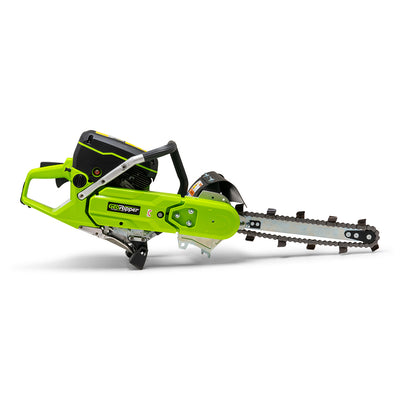
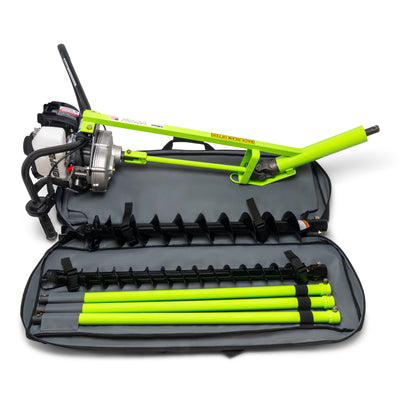
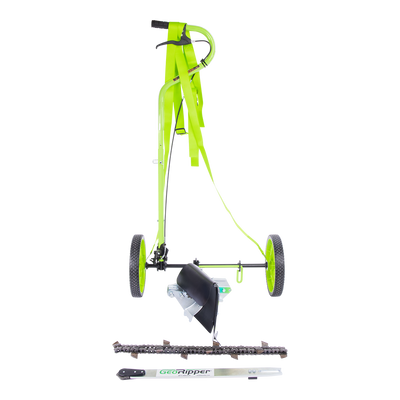
The SiBore™ Drill helps crews bore short distances under sidewalks and hardscape without tearing everything up. The GeoRipper® cuts a fast, narrow trench for service drops with minimal restoration. Used together, MiniTrencher equipment helps contractors finish those final connections faster, cleaner, and with less disruption; without turning a customer’s front yard into a construction zone.
As broadband demand grows and Dig Once policies continue to gain traction, compact, portable equipment isn’t competing with smarter infrastructure planning. It’s what helps make that planning work in the field.
Here’s a closer look at the three biggest challenges contractors face during last-mile fiber installation — and how the right equipment can change the equation.
Challenge #1: No Room for Large Equipment
Almost every last-mile fiber job involves some version of the same problem: the equipment that would make the job easy doesn't fit where the work needs to happen.
Residential neighborhoods and urban infill areas weren't designed with trenching rigs in mind. According to Valhalla Industries, one of the biggest challenges of the last mile is navigating the terrain at each site, and almost every neighborhood, and even every house, has its own unique layout.
That variability is one of the most consistent pain points in last-mile deployment, and it only gets harder as crews move from street-level infrastructure into individual service drops. Large walk-behind trenchers and conventional boring equipment can handle open ground, but they're the wrong tool for the final stretch. They're too wide for narrow side yards, too heavy for delicate landscaping, and too disruptive for property owners who expect their yard back in the same condition it was previously.
Challenge #2: Last-Mile Costs Eat into Every Job
The cable and conduit aren't what makes fiber installation expensive; the labor is.
According to VSOL, civil engineering costs, like trenching, duct installation, and surface restoration, account for up to 70% of last-mile deployment expenses. A significant portion of that cost comes not from the digging itself, but from what comes after: repaving roads, replacing sections of sidewalk, re-seeding lawns, and resetting pavers.
Valhalla Industries puts it plainly: the last mile is usually the most expensive and time-consuming part of the entire fiber installation. Homeowners don't care how fast you pulled the fiber. What they care about is whether their driveway looks the same at the end of the day as it did at the start. When restoration costs run high, jobs that should be profitable become margin problems and repeat business disappear.
Challenge #3: Project Coordination Gets Complicated Fast
Fiber optic installation requires an unusual level of coordination. State agencies, internet providers, utility companies, municipalities, HOAs, and individual homeowners all have a stake in how and when the work gets done. At the conduit level, Dig Once policies are helping streamline some of that complexity, but at the last mile, contractors are still managing a different set of stakeholders on every single job.
Dig permits, road closure approvals, and community notification requirements add time and overhead before a shovel ever touches the ground. When the work itself is disruptive, with torn-up streets, noisy equipment, and extended job timelines, coordination becomes even more contentious. Valhalla Industries notes, the more disruption a crew creates at the site level, the harder it is to keep homeowners, HOAs, and local governments on board.
The Tools Built for the Final Stretch
The challenges above don't go away, but the right equipment keeps them from compounding each other. The GeoRipper® and SiBore™ Drill are built specifically for the conditions contractors face in the last mile.
The GeoRipper® cuts a 2"-wide trench — narrow enough to minimize turf disturbance, fast enough to keep jobs on schedule. Models start at just 32 lbs, which means one operator can work in tight side yards, around landscaping, and in spaces that would stop a walk-behind trencher cold. Less surface disruption means faster backfill, less restoration work, and fewer conversations about property damage after the job is done.
When the route crosses a sidewalk, driveway, or other hardscape, the SiBore™ Drill handles the bore without tearing up the surface. It requires no water — so there's no slurry to clean up, no mess to explain to a homeowner, and no surface damage waiting to become a repair bill. It's self-contained and trailer-free, which means it goes where the job goes.
Used together, these tools let crews complete last-mile connections efficiently, with minimal disruption to the property and the surrounding community. Less restoration means lower job cost. Less disruption means fewer stakeholder headaches. And jobs that wrap up clean and on time are the kind that generate referrals.
Explore MiniTrencher's full product lineup and see how the GeoRipper® and SiBore™ Drill can fit into your fiber installation workflow.